
A family bathroom often has to deal with more than the occasional splash; I know ours does with three boys! There are wet feet after showers, towels dropped on the floor (why aren’t they just hung back up?), bath toys, hurried school mornings with toothpaste left across the sink and the regular cleaning that comes with several people using the same room. A floor can look perfect on a sample board and still be frustrating once real family life gets involved.
That makes bathroom flooring a practical decision as much as a decorating one. Water resistance matters, but so does cleaning, comfort, the condition of the existing floor and how the new surface will work around the bath, toilet and doorway.
What Is the Best Flooring for a Bathroom in a Family Home?
There is no single answer for every bathroom. The best choice depends on how the room is used, how much water reaches the floor and how much maintenance the household is prepared to take on.
For a family bathroom, start with the everyday routine. A downstairs cloakroom used mainly by guests has very different demands from the main bathroom used for children’s bath time every evening. In the latter, splashes are inevitable, so flooring designed for bathroom use makes more sense than choosing purely on appearance.

Cleaning matters too, because nobody wants to be spending more time than is needed actually scrubbing it down. Bathrooms already have enough surfaces that need regular attention, so a floor that can be wiped or mopped without complicated maintenance is useful. It’s also worth thinking about how the surface feels underfoot and whether the finish will still work if the room is redecorated a few years later.
When LVT Makes Sense in a Bathroom
Luxury vinyl tile can be a useful option when you want the appearance of wood, stone or tile without using those materials themselves. Waterproof LVT ranges are designed for rooms where moisture is part of everyday use, although the specification of the particular product should always be checked before buying.
For households looking for a bathroom floor that combines water resistance with straightforward maintenance, Urmston Carpets offers LVT in wood, stone and tile-effect finishes, with waterproof ranges suitable for bathrooms.
The choice of finish can make a noticeable difference in a small room. A pale wood effect can keep the floor visually quiet beside patterned towels or colourful storage, while a stone or tile effect may suit a bathroom with simpler walls and fittings. Looking at a larger sample is useful because a design that appears subtle in a small piece can feel much stronger once it covers the whole floor.
I would have loved LVT in our bathroom but because we have a level shower floor rather than a tray, it wasn’t an option for us!
Think About Water Beyond the Shower Area
It is easy to focus on the space immediately beside the bath or shower, but water tends to travel further in a family bathroom. Children step out with wet feet, damp towels land wherever there is space and condensation can leave surfaces damp even when nobody has spilled anything.
That is why the flooring specification matters across the whole room rather than only in obvious splash zones. If a manufacturer describes a particular range as suitable for bathrooms, check the installation requirements as well as the surface itself. The performance of the finished floor depends on the product being used in the way it was designed to be used.
Ventilation remains important regardless of the flooring chosen. Extract ventilation helps remove moisture produced by baths and showers rather than leaving it to build up in the room.
Compare the Practical Differences Between Materials
Tiles remain a familiar bathroom choice and can work particularly well where a hard, traditional surface suits the design. They also come in a huge range of sizes and finishes, which makes them easy to coordinate with wall tiles.
LVT offers a different feel. Wood and stone effects allow the bathroom to borrow the appearance of natural materials without requiring a real timber or stone floor. For a family home, that can make it easier to carry a similar interior style from the hallway or bedroom into the bathroom while still choosing a product intended for the room.
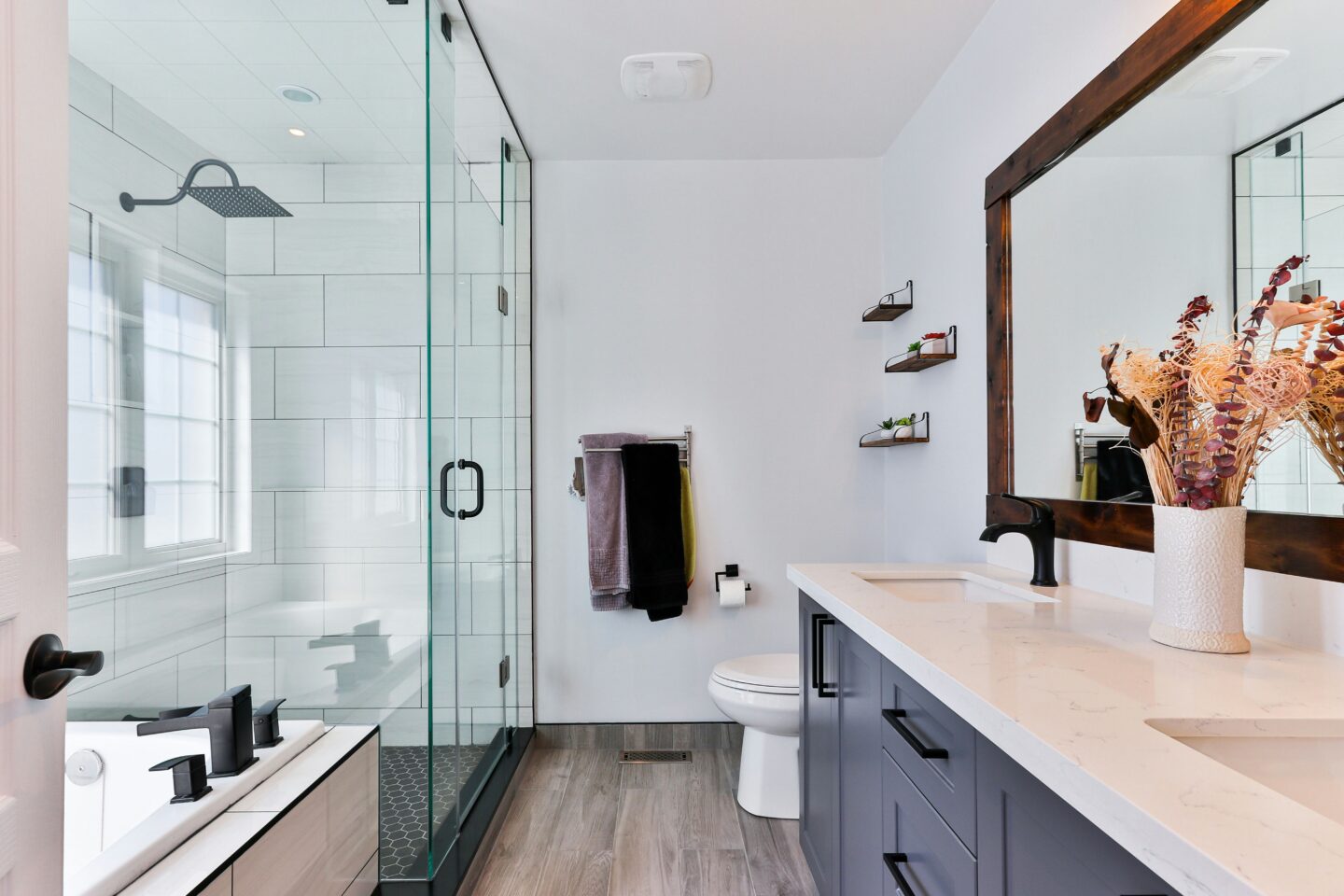
There is little value in choosing one material simply because it is considered the standard bathroom option. Look at what the individual product is designed for, how it needs to be fitted and what maintenance it requires. Two floors that look similar in photographs may have quite different installation instructions or suitability for wet areas.
Check the Floor Beneath Before Ordering
Bathroom flooring cannot compensate for problems underneath it. Before ordering a new surface, it is worth checking whether the existing floor is sound, level enough for the chosen product and whether any repairs are needed first.
This matters particularly with LVT because bumps, ridges or other imperfections underneath can affect the finished surface. The subfloor should therefore be checked and prepared for the particular product before fitting begins.
The floor has to meet doorways neatly and may need to be fitted around bathroom fixtures, pipework or fixed furniture. Knowing what will stay in place and what will be removed before fitting makes measuring and preparation much easier.
If the existing bathroom floor is being lifted as part of a larger renovation, that is a good point to assess the surface properly rather than ordering the replacement based only on the dimensions of the room.
Choose for the Bathroom You Actually Have
Bathroom inspiration photographs are useful, but they rarely show the wet towels, children’s bath toys and hurried weekday mornings that the finished room eventually has to handle. A beautiful floor still needs to make everyday use easier rather than adding another surface to worry about.
For a busy family bathroom, that usually means narrowing the choice according to moisture suitability, cleaning, fitting requirements and the existing room before becoming too attached to a particular colour or pattern.
Once those practical questions are settled, choosing the finish becomes much easier. For a family bathroom, the better option is the one that suits the room, works with the rest of the home and does not make busy mornings any harder than they already are.