
I love a good vision board for a room and more and more often I find myself drawn to designs that look good, but also help to solve problems. Whether it’s to do with space, sound or pure aesthetics, modern interiors no longer treat materials as purely decorative; you expect them to be functional while still looking sharp and that’s exactly where PET felt stands out. It blends acoustics, sustainability, and design flexibility in a way that feels practical and visually appealing.
You see it in offices, homes, and public spaces because it adapts easily and it also gives designers more freedom to experiment without sacrificing performance or comfort.
If we were to re-do our snug area within the kitchen, I’d definitely be considering using PET felt to help with the acoustics. The vaulted ceilings are often an echo chamber, especially with three boys running around playing football, and often there’s nothing to catch the sound, and I also think it’d be nice to break up some of the plain wall.
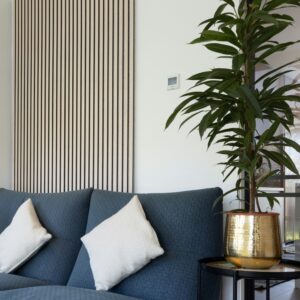
Acoustic PET Felt Wall Panels As Design Features
When you install PET felt panels on your walls, you’re not just decorating. You’re actively improving how the room sounds. These panels absorb echoes and reduce background noise, which makes conversations clearer and more comfortable. You notice the difference immediately, especially in offices or shared spaces where sound tends to bounce around.
At the same time, these panels don’t feel like a purely technical solution. They cover walls in a clean, controlled way, which works perfectly with minimalist interiors, although they can also pull a room together to make it warm and inviting. Instead of adding clutter they simplify the visual field, giving you a smooth, cohesive surface that feels intentional.
Design flexibility plays a huge role here as well. You can arrange panels in geometric patterns, mix sizes, or even create custom layouts that match the room’s proportions. This modular approach lets you experiment without committing to anything permanent, making it easier to adapt your space over time.
According to specialists from Material Logiq, what really makes PET feel stand out is how it blends function with aesthetics. You’re not choosing between good acoustics and good design anymore. Instead you get both in one solution, which is why these panels have become such a go-to option in modern interiors.
Ceiling Solutions That Elevate Interiors
Ceilings often get ignored, but PET felt gives you a chance to turn them into a focal point. Suspended baffles and clouds create visual movement overhead while also improving sound quality. You end up with a ceiling that feels alive instead of flat and forgotten.
Layering plays a big part in this trend. By combining different heights and shapes, you can create depth that draws the eye upward. This approach works especially well in large spaces where a plain ceiling would otherwise feel empty or disconnected from the rest of the design. This is one of the standout areas in our kitchen dining space; the high vaulted white ceilings often feel like they could do with a little something.
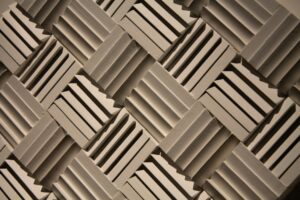
In open-plan environments, sound control becomes even more important. PET felt ceiling elements help reduce noise without closing off the space, so you keep that open feel while making it more comfortable to work or relax.
Installation tends to be simpler than people expect. These elements are lightweight and adaptable, so you don’t need heavy structural changes to make them work. That makes them a practical choice, especially if you want a noticeable upgrade without a complicated renovation process.
Sustainable Materials And Eco-Conscious Design
One of the biggest reasons PET felt keeps gaining traction is its recycled origin. It’s typically made from plastic bottles, which means you’re giving existing materials a second life instead of relying on new resources. That alone makes it appealing for anyone trying to make smarter design choices, for those looking to reduce their footprint or are on their path to becoming more eco-friendly; it’s relatively low compared to many traditional materials.
Production processes continue to improve, and you can now find options that align with stricter sustainability standards. This gives designers more confidence when recommending it for long-term use.
Many projects today aim for certifications like LEED or similar frameworks, and PET felt fits right into that conversation. It helps meet environmental criteria without forcing you to compromise on aesthetics, which used to be a common trade-off in sustainable design.
You can see the demand growing across both residential and commercial spaces. People want interiors that look good but also reflect their values. PET felt sits right at that intersection, offering a solution that feels both responsible and visually appealing.
Customisation And Branding Opportunities Using PET Felt
PET felt is really strong when it comes to customisation. You get access to a wide range of colours, which makes it easy to match existing palettes or create something bold from scratch. This flexibility gives designers, home and business owners much more control over the final look.
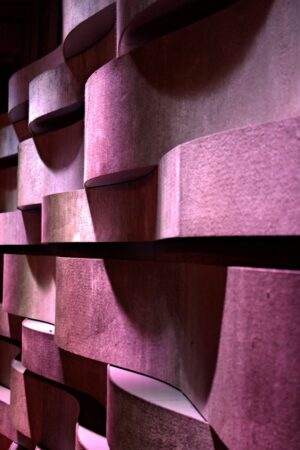
Laser cutting opens up even more possibilities. You can create intricate patterns, shapes, or even put company logos directly into the material. This turns a simple panel into something much more personal and distinctive, especially in branded environments.
Businesses often use this to reinforce their identity within a space. Instead of relying on separate signage, they integrate branding directly into walls or partitions. That creates a more cohesive feel, in which design and messaging work together rather than competing for attention.
What’s interesting is how naturally PET felt fits into commercial settings. Whether it’s an office, a showroom, or a hospitality venue, it adapts to different needs without losing its visual appeal. That balance makes it a reliable choice for designers working across industries.
Flexible Partitions And Space Dividers
Open spaces can feel chaotic without some form of structure, and PET felt partitions help solve that problem. They let you define different zones without building permanent walls, which keeps the layout flexible and adaptable as your needs change.
Because the material stays lightweight, moving these partitions around doesn’t feel like a major task. You can reconfigure a room quickly, whether you’re adjusting for a meeting, an event, or just a change in workflow. That level of flexibility is hard to achieve with traditional materials.
At the same time, these dividers create a sense of privacy without completely isolating people. You still get visual and acoustic separation, but the space doesn’t feel closed off. This works particularly well in offices where collaboration and focus need to coexist.
From a design perspective, they don’t feel like an afterthought. PET felt partitions often double as decorative elements, adding texture and color while serving a practical purpose. That dual role makes them a smart addition to modern interiors.
Texture And Depth In Modern Interiors
Flat surfaces can make a space feel lifeless, which is where PET felt comes in. Its soft texture immediately adds a layer of depth, making walls and surfaces feel more dynamic. You notice this especially in rooms that rely heavily on clean lines and minimal decoration.
The tactile quality also changes how people interact with the space. Instead of everything feeling hard and cold, you introduce a softer element that makes the environment more inviting. This subtle shift can have a surprisingly strong impact on overall comfort.
Layering materials becomes much easier with PET felt. You can combine it with wood, metal, or glass to create contrast, which helps each material stand out more. This kind of combination gives designers more tools to build interesting, balanced interiors.
There’s also a warmth that comes with it, both visually and physically. Even in modern spaces that lean toward minimalism, PET felt helps prevent that sterile feeling. It adds just enough softness to make the space feel lived-in without losing its clean aesthetic.
PET Felt In Summary…
PET felt proves that modern design doesn’t have to choose between function and style. It handles acoustics, adds texture, and supports sustainable goals, all while fitting seamlessly into different interiors. You can use it in subtle ways or make it a focal point, depending on your vision. Moreover, its flexibility keeps it relevant as design trends evolve, which makes it a smart, future-proof choice for a wide range of spaces.